Warehouse Cleaning Brisbane: How Dust, Spills and Poor Floors Quietly Destroy Safety and Stock Value
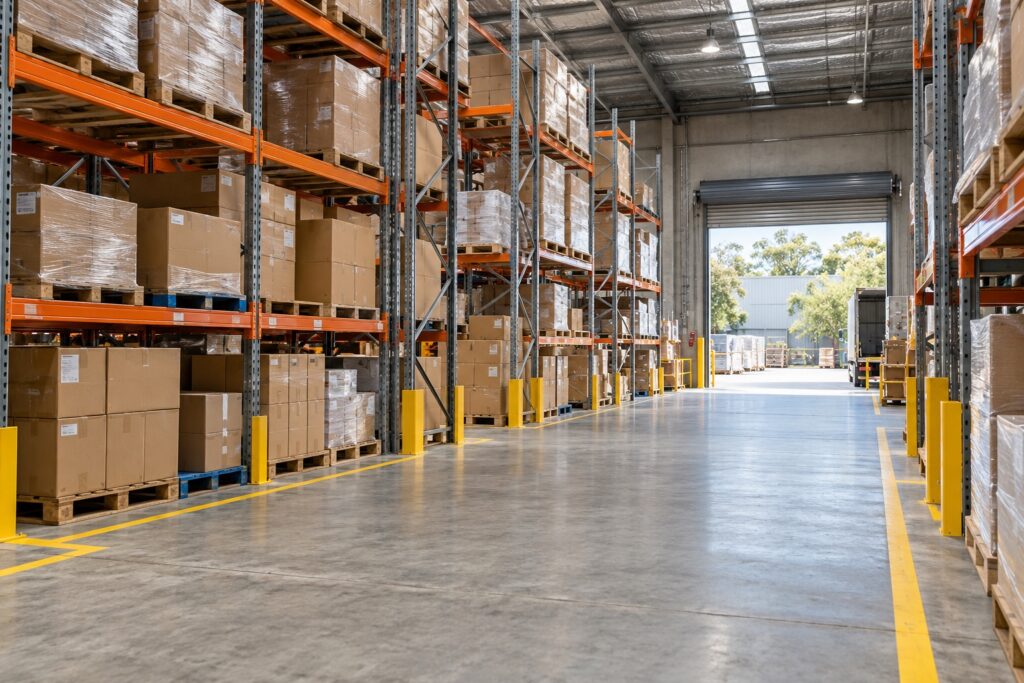

A dirty warehouse creates more than a presentation problem.
Dust, oil, packaging waste, leaking fluids and contaminated floors can create slip and trip hazards, interfere with day-to-day operations and leave stored goods and packaging exposed to unnecessary dirt or damage.
For busy Brisbane warehouses, distribution centres and industrial facilities, cleaning should therefore be treated as part of routine facility management, not something booked only when the floor starts looking dirty.
WorkSafe Queensland specifically identifies spills, dust, litter, oils and other floor contaminants as factors that increase slip risk and recommends responsive cleaning systems alongside routine housekeeping.
Warehouses combine people, forklifts, stock movement, loading areas and machinery in the same environment.
That makes floor condition particularly important.
WorkSafe Queensland identifies poor housekeeping issues such as unmanaged spills, objects extending into walkways and damaged or uneven flooring as potential causes of workplace slips and trips. Recommended controls include routine cleaning, spot cleaning, spill management and maintenance systems.
In a warehouse, small cleaning issues can quickly become operational hazards:
A cleaning program cannot replace your wider WHS procedures, but it can form an important part of keeping the facility controlled and presentable.
Dust rarely stays in one place.
Forklift movement, open roller doors, loading activity and daily stock handling can continually redistribute it across floors, racking, ledges, packing areas and stored inventory.
Over time, excessive dust can:
The exact risk depends on what your warehouse stores and produces. A general logistics facility will have different requirements from a food warehouse, workshop, manufacturing plant or temperature-controlled facility.
That is why warehouse cleaning in Brisbane should be based on zones and operations, rather than one generic checklist.
Oil, water, grease, powders and leaking machinery fluids should not remain on warehouse floors until the next scheduled clean.
WorkSafe Queensland recommends controlling contamination at its source where possible, preventing it from spreading and removing contamination promptly when it reaches the floor.
A well-managed warehouse should therefore have a clear response for:
Regular cleaners should also understand when an incident is within their cleaning scope and when it needs to be escalated for specialist attention.
Cleaning a warehouse floor incorrectly is not necessarily better than leaving it alone.
WorkSafe Queensland notes that incorrect cleaning can make flooring more slippery, while damaged concrete, cracked tiles, curling mats and uneven surfaces can increase trip risk. Maintaining flooring requires both appropriate cleaning and physical maintenance when defects appear.
Professional floor care may include:
The method should match the surface, contamination and operating environment.
There is no single cleaning frequency that suits every warehouse.
A practical starting point is:
| Warehouse Zone | Practical Cleaning Frequency |
|---|---|
| High-traffic floors | Daily or 3–5 times weekly |
| Loading docks | Daily or each active shift where needed |
| Packing and dispatch areas | Daily |
| Staff bathrooms and amenities | Daily |
| Breakrooms and kitchens | Daily |
| Lower-traffic storage zones | Weekly or as required |
| Racking, ledges and high dusting | Periodically |
| Deep floor cleaning | Scheduled according to traffic and contamination |
High-volume distribution centres generally require more frequent attention than low-traffic storage facilities. A2 recommends determining frequency around traffic, production levels, goods handled and shift patterns rather than applying one standard schedule to every warehouse.
A2 Commercial Cleaning provides professional warehouse and industrial cleaning across Brisbane, including distribution centres, manufacturing facilities, cold-storage environments, fulfilment centres and workshops.
Cleaning schedules can be built around shift changes, loading windows and operating hours to reduce disruption.
Through the A2 Nexus™ framework, warehouse cleaning is supported by facility-specific checklists, photo-verified completion, internal inspections and documented corrective actions.
A2 services warehouses across Brisbane and surrounding areas, including Eagle Farm, Northgate, Eight Mile Plains, Logan, Ipswich and Moreton Bay.
If dust is building up on stock, spills remain visible between shifts or warehouse floors never seem properly restored, the problem may be your cleaning scope rather than your facility.
Book a free warehouse cleaning site assessment with A2 Commercial Cleaning.
Get a tailored cleaning program built around your warehouse layout, traffic, operating hours and high-risk areas.