Medical Centre Cleaning Brisbane: What Should Be Cleaned Daily, Weekly and Between Patients?
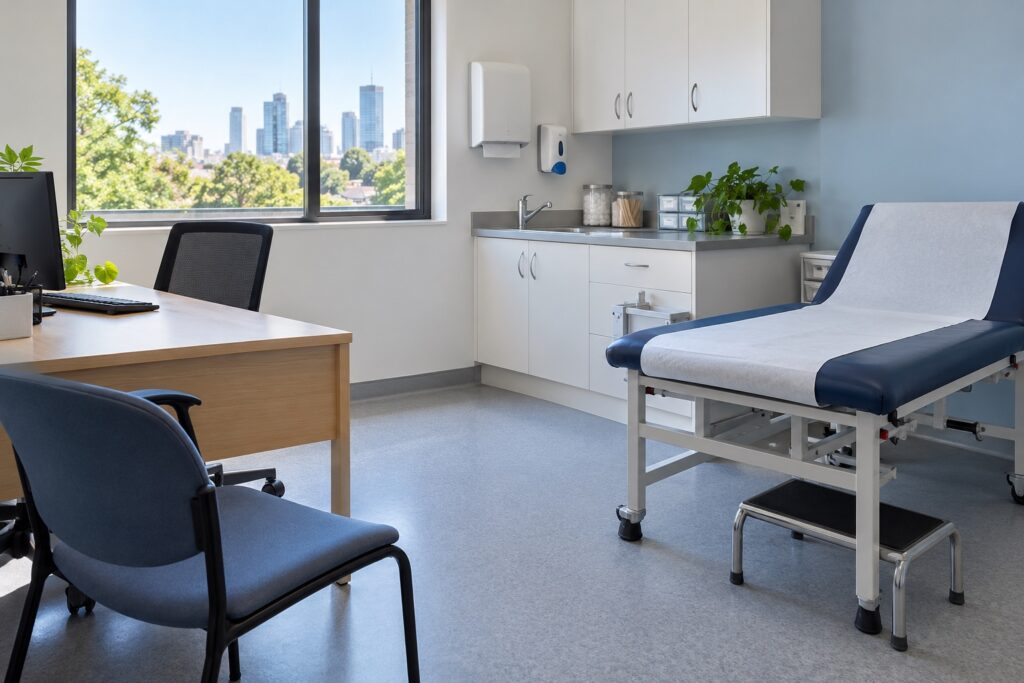

For a Brisbane medical centre, not everything should be cleaned at the same frequency.
Patient-contact surfaces and contamination need attention when they occur. Frequently touched surfaces should be cleaned at least daily, while lower-contact areas can follow a less frequent, risk-based schedule.
Current RACGP infection prevention and control guidance recommends that every environmental surface within a practice be included in a documented cleaning schedule, with frequency determined by contact, traffic and contamination risk. Frequently touched surfaces should be cleaned at least daily and whenever visibly soiled or contaminated.
A well-managed Medical Centre Cleaning Brisbane program therefore needs to clearly separate between-patient cleaning, daily environmental cleaning and scheduled detailed cleaning.
Between-patient cleaning is generally different from the after-hours work performed by a commercial cleaner.
Clinical staff need procedures for surfaces and equipment requiring attention immediately after patient use or contamination.
Depending on the treatment provided and the practice’s risk assessment, this can include:
RACGP guidance requires prompt cleaning following known contamination and recommends detergent cleaning before disinfectant where disinfection is required.
This means a clinic should not rely on its evening cleaner for something that needs to be addressed before the next patient enters the room.
Daily professional medical cleaning should concentrate on high-use and frequently touched areas throughout the practice.
A practical daily scope may include:
| Area | Typical Daily Cleaning |
|---|---|
| Waiting room | Floors, seating surrounds and accessible surfaces |
| Reception | Counters and frequently touched surfaces |
| Consulting rooms | Floors, desks and scheduled environmental surfaces |
| Patient toilets | Toilets, basins, taps, handles and floors |
| Treatment areas | Environmental surfaces within the cleaner's agreed scope |
| Staff areas | Kitchens, sinks, benches and floors |
| General areas | Bins, corridors, entrances and touchpoints |
RACGP identifies bathroom fixtures, consultation-room furniture, carpets and frequently used surfaces as areas that may become soiled throughout the day, with high-contact surfaces requiring more frequent attention.
During an infectious disease outbreak, cleaning frequency may need to increase further based on health-authority advice.
There is no universal RACGP rule saying every medical centre must perform a particular list of tasks once per week.
Instead, lower-contact areas should be scheduled according to the practice's risk assessment.
For many Brisbane clinics, a weekly detailing program may include:
Periodic services such as carpet extraction, floor scrubbing, window cleaning and other restorative work can then be scheduled according to traffic, flooring type and condition.
Using stronger chemicals everywhere does not automatically mean a medical centre is cleaner.
RACGP guidance states that whether detergent alone or detergent plus disinfectant is required depends on the contamination and infection risk. Where disinfectant is necessary, surfaces must first be effectively cleaned unless an appropriate combined product is being used.
Correct product concentration, contact time, compatibility and drying also matter.
That is why medical centre cleaning requires processes, not simply different chemicals.
One of the most common problems in healthcare cleaning is an unclear division between clinic staff and contracted cleaners.
RACGP guidance says cleaning schedules should identify who is responsible for each task, the required frequency, cleaning method, equipment and monitoring arrangements. Outsourced cleaners should clearly understand their role within the practice's infection prevention program.
A good medical cleaning contract should therefore define:
A2 Commercial Cleaning provides specialist medical centre cleaning across Brisbane for GP clinics, dental practices, allied health centres, specialist clinics and other healthcare facilities.
A2’s healthcare cleaning programs use site-specific zone-based protocols, documented cleaning schedules, trained and background-verified cleaners, and photo and video verification of completed shifts.
This helps move medical cleaning away from a generic checklist and towards a clearly defined system of tasks, frequencies and accountability.
If you cannot clearly identify what gets cleaned between patients, every day and on a scheduled basis, your medical centre cleaning scope may need reviewing.
Book a free medical centre cleaning site assessment with A2 Commercial Cleaning.
Get a tailored Brisbane medical cleaning program built around your practice layout, patient traffic, treatment areas and cleaning requirements.